A moment someone shared with you
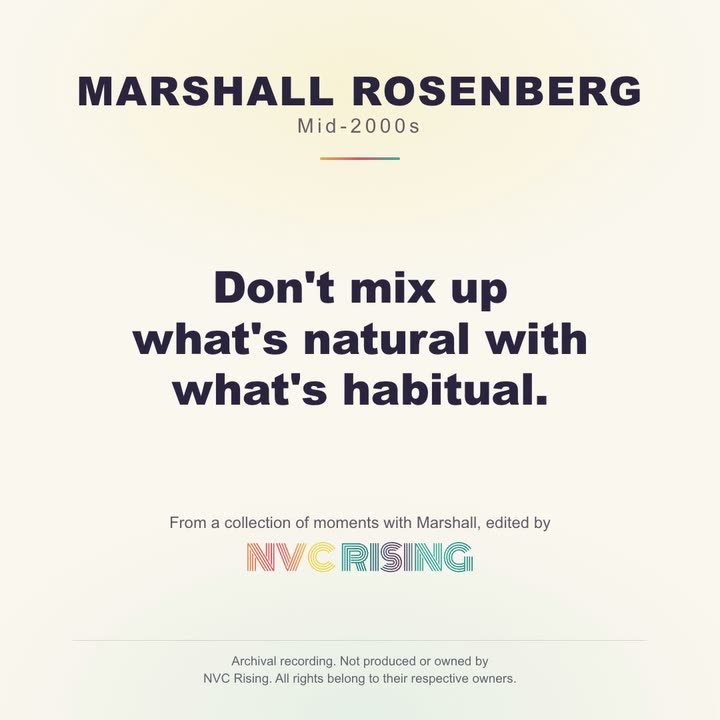
The language of blame feels normal only because it is habitual; compassionate connection is the more natural language, which is why people get hungry for it.
0:52 · opens by email Transcript
Marshall explains why he is optimistic. Quoting Gandhi, he separates what is natural from what is habitual: we have been trained for centuries in a language that contributes to violence, but NVC is closer to our nature, so when people meet it they want more.
I'm very optimistic about it because I believe it's a more natural language. Gandhi warns us to be careful about mixing up what's natural with what is habitual. So the language we've been taught, which I think contributes to the violence, is now habitual. We've been trained in this way for centuries.
The rest is in the clip, subtitled.
Watch the whole clip free ↑What's inside
Search by any word Marshall says, filter by theme, or press shuffle and let a clip find you.
What is alive in us, and what we long for
Giraffe ears, presence, hearing the person behind the words
Jackal thinking, inside and out, and what lies under it
Requests, demands, honesty and a giraffe's no
Appreciation, and giving from the heart instead of duty
Couples, parents, children, exes
Mediation, war, punishment, school and social change
“You don't have to guess right, we just have to guess human.”Marshall, in “You don't have to guess right”
“Every no is a poorly expressed yes.”Marshall, in “To say no in giraffe, never say no”
“We human beings, it doesn't take much to make life wonderful.”Marshall, in “A wink across the room”
The clips are archival recordings, cut and subtitled by NVC Rising. We don't own them; all rights belong to their owners. We share them so Marshall's voice keeps reaching people.