Why Am I Lonely Even With Friends? What NVC Reveals About Real Community
→ Back to the Blog
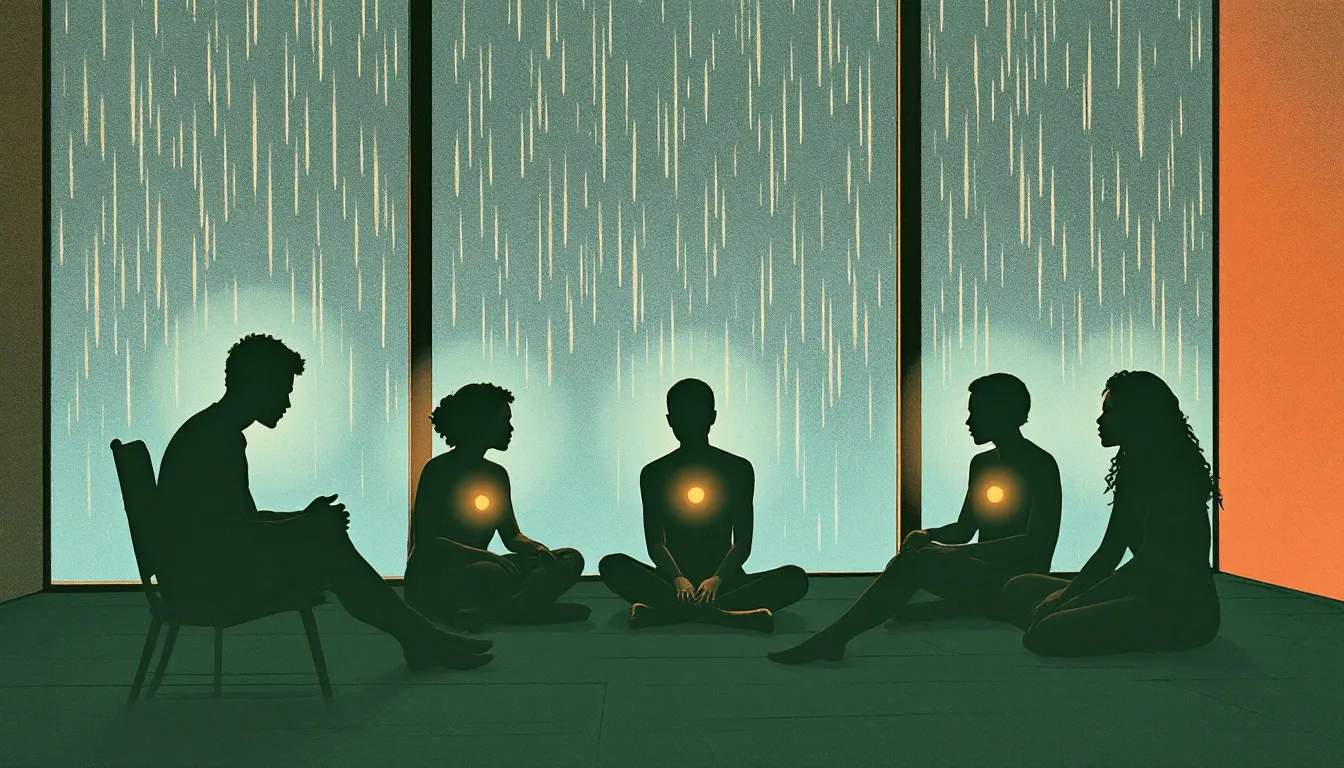
You were in the room. But were you in contact?
Most of us have been in the room.
The circle of chairs. The opening round. The workshop where someone said “this changed my life” and you thought: maybe this time.
And then you drove home alone, feeling vaguely like you’d missed something.
The Loneliness Paradox Nobody Talks About
Here’s what the numbers show: 50% of U.S. adults report being lonely right now. Close friendships have collapsed: in 1990, only 3% of adults had no close friends outside family. Today it’s nearly 1 in 5.
But here’s what the numbers don’t show: most lonely people aren’t isolated. They’re surrounded.
They have colleagues. They have WhatsApp groups. They show up to things. They say “we should do this again” and mean it for about 45 minutes.
The problem isn’t proximity. It’s contact.
Being in the same room as someone is not the same as being met by them. Sharing an agenda is not the same as sharing what’s actually happening inside you. We’ve gotten very good at functioning next to each other, and calling it connection.
NVC doesn’t offer a cure for this. It offers something more honest: a practice that teaches you what contact actually requires.
What NVC Adds That Other Community Containers Don’t
Warmth? Other groups have that. Safety? Sure, some. Shared values? That’s most communities.
What NVC adds is specific: language for what’s happening inside you, in real time, when it gets hard.
Because here’s what actually ends community: not conflict. Not difference. Not even betrayal. What ends community is the moment someone doesn’t know how to stay.
Someone says something that lands wrong. The air shifts. And most people, without thinking, do one of three things: they smooth it over, they withdraw, or they escalate. Not because they’re bad at community. Because they were never given tools for the moment when being real feels risky.
NVC practice, specifically the capacity to name your own needs without collapsing or attacking, is what makes staying possible. Not comfortable. Possible.
There’s a word for groups that have developed this capacity: rare.
The Mainstream Frame Gets It Backwards
Most community-building advice starts from: go find your people.
Join a group. Attend the event. Show up consistently. Reduce isolation through exposure.
It’s additive logic. Community as a resource you access, like a gym membership.
NVC’s frame is different, and harder: community is a practice, not a place. You don’t find it. You build the capacity for it. And that capacity is built exactly at the moments when you most want to leave.
Miki Kashtan, one of the field’s most rigorous teachers, frames it this way: we meet most of our needs through others. Not alongside them. Through them. Interdependence isn’t a nice idea. It’s structural. Which means community isn’t optional for a meaningful life. It’s where needs live.
That’s a different premise than “find your people.” It says: the quality of your relationships is a direct function of the skills you bring to them. And skills are built through practice, over time, in real conditions.
What “Real Conditions” Actually Looks Like
Here’s a moment from an NVC practice circle.
Midway through a session, someone goes quiet. You can feel them pulling back. Then they say, slowly: “I’m about to leave. Not the room. But the conversation. I notice I’m protecting myself and I don’t know from what.”
Nobody fixes it. Nobody reassures them. One person asks: “What do you need right now?”
A pause. Then: “To know it’s okay to not know.”
The circle holds that. Not solved. Not moved past. Held.
That person didn’t leave. Not because the group was warm enough. Because they had words for what was happening, and the group had the capacity to receive it without collapsing the moment into something manageable.
That’s what changes in sustained NVC practice. Not your feelings. Your relationship to them. And other people’s relationship to them.
If this is the kind of room you’ve been looking for, the NVC Learning Community is where this practice happens, over months, with the same people, in real conditions.
Why Duration Is the Point
Research on NVC training consistently shows something the workshop model quietly hides: short interventions change knowledge, not patterns.
A 2-year NVC training program in a juvenile treatment center showed statistically significant increases in peaceful conflict resolution between staff and youth. Not after the first weekend. After two years of embedded practice.
This is why the field is moving toward longer containers. Roxy Manning’s immersion program runs 8 months. The NVC TCCP certification pathway is longitudinal by design. The NVC Learning Community runs 9 to 10 months.
The length isn’t a feature. The length is the product.
Because what you’re actually building isn’t a set of skills you learn and then have. You’re building a new default. A new baseline of how you respond when someone is difficult, or distant, or says something that triggers every defense you own.
That default doesn’t change in a weekend. It changes through repetition, in community, over months.
What You’re Actually Hungry For
If you’ve tried community and left feeling like you missed something, you probably didn’t miss it because the group was wrong for you.
You missed it because you didn’t have the tools to be fully there. And neither did most of the people around you.
That’s not a criticism. It’s a diagnosis.
The hunger most people bring to NVC spaces isn’t for connection as a feeling. It’s for a place where being real isn’t a risk. Where you can say “I’m struggling” without someone immediately trying to fix you. Where conflict doesn’t mean the relationship is broken. It means you’re actually in one.
That kind of community doesn’t exist because people are good enough or warm enough or aligned enough in values.
It exists because the people in it have practiced.
The Honest Offer
You might not feel more connected after the first session.
You might feel more real. More seen in places you normally hide. More aware of how much you’ve been managing, rather than meeting.
Over time, that’s the same thing.
The research on loneliness shows we are in a structural crisis of connection, and that social media, the platform most of us use to reach each other, actively worsens isolation. There is no algorithm that teaches you to stay in a hard conversation. There is no feed that builds your capacity to hear someone’s pain without immediately trying to resolve it.
That capacity is built the old way: in rooms, over time, with real people, using a practice that names what’s actually happening.
A Different Question
The usual question people bring to NVC is: will this help me communicate better?
The deeper question, the one most people are actually asking underneath that: is there a way to be in community that doesn’t require me to hide so much of myself?
Yes. But it requires practice. Not just attendance.
If you’ve spent years functioning next to people and wondering why it still feels lonely, the answer probably isn’t a better group. It’s a practice that changes what you bring into the room.
That practice takes time. It asks things of you. And it is, by nearly every account from people who’ve stayed with it, worth it.
FAQ
What is Nonviolent Communication (NVC)?
NVC is a communication and relationship practice developed by Marshall Rosenberg that gives you language for what’s happening inside you, your feelings, your needs, and a way to hear what’s happening inside someone else without collapsing, attacking, or fixing. It’s the skill of staying in contact when contact gets hard.
Why do I feel lonely even when I have friends?
Because the problem isn’t proximity. It’s contact. You can be surrounded by people who like you, work with you, or message you daily and still feel unmet, because being in the same room as someone is not the same as being met by them. Loneliness in community is usually a contact problem, not a quantity problem.
Can NVC really change how I show up in community?
Yes, but not after a weekend. What changes through sustained NVC practice isn’t your feelings. It’s your relationship to them, and other people’s relationship to them. The capacity to name what’s happening when something lands wrong, instead of smoothing it over, withdrawing, or escalating, is the specific shift. That’s what makes staying possible.
How long does it take to learn NVC well enough to practice in community?
Longer than the workshop model suggests. A 2-year NVC training program in a juvenile treatment center showed statistically significant increases in peaceful conflict resolution, but only after two years of embedded practice. The NVC Learning Community runs 9 to 10 months for that reason. The length isn’t a feature. The length is the product.
Stop Functioning Next To People
The NVC Learning Community runs for 9 to 10 months. It’s not a workshop series. It’s a container designed for the kind of change that only happens over time, in real relationship, with people who show up to practice alongside you.
If you’re ready to stop functioning next to people and start actually meeting them, this is where that starts.