Archive
The Global Festivals Library
Three global online festivals. Dozens of sessions with teachers from around the world. If you attended, your recordings are here.
Archive
Three global online festivals. Dozens of sessions with teachers from around the world. If you attended, your recordings are here.

Enter the email you registered with. We'll send you a private link to the recordings for the festival(s) you attended.
The festivals
What does Community mean in your life? As human beings, we are not meant to live solitary lives. We thrive in relationship; we are all part of something larger. Community can be any group of people around you; your family, your friends or an intentional community. We will explore ways of connecting to our communities - individually and collectively - and invite your vision of a world that cherishes contributing to each other.
We are passing through incredibly challenging times. As a friend of mine said to me the other day: "During these uncertain times, the only thing that is certain is the connections we have. The only thing that is left to rely on is the human beings around us". Communication with our close ones (and with ourselves) will most likely be a central key in how to navigate through these new life landscapes we are facing. Many of us are facing some radically new challenges: living closely in a small apartment with our children, partner or family; anxiety, fear, depression and uncertainty; pressure of losing our job, business or daily routine; new tastes of loneliness. During this workshop we will focus on subjects such as these.
While life flows through us fully and wholesomely in every moment, it seems that we have only learned how to capture and compartmentalize it with our minds. This becomes quite problematic when we start using Nonviolent Communication, as we notice that we are only able to think about feelings and needs, but to not really feel them, experience them. This way NVC tends to remain on the cognitive level only and consequentially fails to bring about shifts and deeper connection. In this session we will be practically exploring how to really feel our feelings, sense our needs and get such a clear experience of life flowing through us in a moment that we can share that directly, leaving our analytical mind to rest for a bit.
It's not always easy to listen deeply. It's not an art I learned as a kid unfortunately and especially not something I received. I can't recall an adult asking me "hey Oriane how are you really?" and deeply listening. In this session we'll dive into practicing the art and craft of this presence. We'll also see how even a difficult message (receiving a judgment, a blame) can contain a beautiful message when I do have "the right ears on" and can see through the words.
We all have privilege. Some of us have a lot; some of us may not even recognize it in our lives. But what most of us have in common is the sense of shame that arises when someone calls the privilege we have to our attention. Let's explore together how to listen when someone raises the question of privilege and more importantly, how we can use our awareness of our privilege to empower those who have less than we do.
The purpose of this workshop is to introduce a way to cultivating a transformative awareness that is expressed as not, "How can I make things better?" but, "How can I behold life and see it clearly, compassionately, through the heart and allow my heart to be moved by life, with others, in the company of people with shared values and shared vision?" From that place, I believe I/individually and we/collectively can move forward in these challenging times and days. We will focus on how can we address feelings of helplessness and powerlessness with what you are seeing in the world? How can we feel centered and clear with how we respond to what's going on in your life or the current social and political climate? How can we engage in the world in a way that's empowering, not motivated by fear, anger, or judgement? A primary concept is that "life is relationship" and we live in a field of relationships. When we are in relationship, we are experiencing our inner world in relation to the outer world. When we are overly focused on the outer world, trying to manage and control and strategize, we are not accessing the full potential of where we can come from unless we are centered in "What is alive in me, where am I centered in my consciousness and being, from which I live and listen and receive and give out in relationship to life?"
Why do we, humans, hold-on to and repeat familiar habits, both in thinking and in action, even when those don't really serve us? Why is it, that in times of uncertainty (more so than in the usual stressful life…), we tend to "fall back" into these habits, even though they deepen our disconnection from ourselves and others? In this workshop we will dive into understanding the 3 forces behind this collective phenomenon, and ways to overcome their multi-generational & collective impact.
This session will be an opportunity to experience three choices we always have in any moment (self-connection, honest revealing, and empathic listening) to support us in embracing how we are in the present time. We don't need to go through this moment alone. We can speak to our present reality and have what we care about now guide us into the next chapter of our lives. What is possible?
Have you ever had a conversation where you were speaking in perfect Observation, Feelings, Needs, and Requests, and it led you further and further from connection? We realized the importance of the intention underlying our communication. In this session we will explore the purpose and intention of NVC as something that we want to come back to, every now and then, to see if our heart resonates with it. There will be lecture, group discussion and a body oriented practice to connect with our intention. This session will also include guidance to stay connected with our body when using a digital device.
Do you do things that you don't understand? Are you often late? Do you try to fix people, even though you tell yourself not to? All of us have patterns of behavior that are confusing or don't make sense, and you may even have spent some time wondering, what are my deep needs here? Why am I repeating this behavior? How could NVC help me with this? Join Sarah Peyton for this session to explore the discoveries that come from thinking about needs from a relational point of view, and experiencing her Unconscious Contract process.
Come and share the worst of the worst feedback you've ever received. Let's have fun learning and practicing how to: recover from the blows of painful and useless feedback; find the priceless gift hidden within; respond gracefully to feedback. We can't control how feedback is given to us, but we can change how we receive it!
In the current pandemic situation, many of us may be experiencing fear - for ourselves, our loved ones, or for the world. In this session we will explore connecting with our fear using the framework of Nonviolent Communication.
Many people in NVC become great at Empathic Listening. But when Marshall developed NVC, he developed 2 powerful legs - both meant to be used equally: Empathy and HONESTY. Not using Honesty comes at a huge cost. We don't really show up in our relationships; they become one-sided and our needs become less important. There is a way to share your heart fiercely and honestly and compassionately which I call Sharing from an Undefended Heart. It supports us to share from our Direct and Undefended Experience of Life and what we care about. This session will build our second leg so we are no longer afraid to express ourselves. We can stop "limping" in our relationships and Life, and instead bring our full self authentically to the Banquet.
Shame is uncomfortable. Shame makes us freeze or do crazy things to avoid its impact on us. Shame makes us limit ourselves and our possibilities. In this session you will get a glimpse of how you, if you can process shame rather than avoiding it, can use it to develop self-care, compassion and courage. You will learn how to reclaim choice and reconnect with the natural source of shame.
"We are capable of suffering with our world, and that is the true meaning of compassion. It enables us to recognize our profound interconnectedness with all beings" (Joanna Macy). As we expand our compassion, we nourish our eyes to appreciate beauty in nature, humanity, and life on the earth. In this Sacred Empathy Circle, participants will co-create sacred space to embrace our vulnerability and courage to emerge; since that is the key to authentic, grounded leadership.
An enemy image is a picture I paint in my mind about a certain person/people or an animal. It signals a threat to me/my family or community. There is a need behind such a choice. I would love to see a mutual connection and understanding of the fears of both parties and a win-win situation in which both are heard. This is a scary invitation to join me as we explore seeing the humanity in a "killer," "dictator," or even "rapist." I do not agree nor support such actions; I am more curious to find the needs behind them.
Who is your enemy, do you have one? Or did you, ever? What does your enemy want you to know? Could your enemy be the teacher? And can you imagine standing in your enemy's shoes? These are questions we will explore together, using different learning modalities - worksheets, dyads and the wisdom of our bodies.
We will explore how Resonant Language enhances the NVC use of Empathy. We will use these super skills to help settle our nervous systems to increase calm, resilience, and compassion (for ourselves & others). Taking our empathy skills to our past selves can provide warmth and healing; taking them to our anxieties about the future can help us move into life with love and strength. This session is based on the work of Sarah Peyton.
Since a very young age, I learned to hide my truth from my father, hoping that this would save me from his punishments. Nevertheless, since this was going against my nature, I developed a profound love, as well as practices, for speaking what we usually hide, even from ourselves – especially when it's "ugly" judgmental material. In this workshop we will look at those hidden places, and learn how to overcome their grip, with tons of courage, curiosity and compassion.
Consumer habits, home ownership, career choice, having children, travel, financial investment, and leisure are some of the many ways each of us contributes to systemic social and environmental issues. This session aims to provide each participant with a simple guided process, a judgment-free space, and NVC tools for exploring how to align their lifestyle with their values. The session is based on the notion that greater connection to our needs opens us up to greater creativity and freedom to act in new and life-serving ways - as opposed to shaming or obliging ourselves to action.
When we experience reality as either/or thinking, it's not uncommon that an internal polarity will emerge — sometimes conscious and clear, others unconscious and taking the shape of tension, anxiety, stuckness — where even our best strategies cannot hold everything we cherish, and we might get caught in a loop, as a fly hitting a glass window trying to fly through. In our session we will explore a practice that combines NVC self-empathy and Deep Democracy debate practice to make room for all that is important, all inner voices, and create some movement and possibility.
I've become convinced that our brains default to interpreting novelty as "probably harmful." That's a strength, yes, but... so limiting! NVC suggested to me that we are always moving toward Life. The shift from looking in the rear view mirror to looking through the windshield has been profound for me. Come explore what you DON'T like, don't want, don't have and see what's on the other side.
Probably each of us at least once had this thought in our heads: "Why do I need to learn Nonviolent Communication when I am already so nonviolent, compared to this other person? And now it is again me who needs to adapt, change…" In this session we will make a quick overview of Nonviolent Communication as a practice as well as awareness, focusing mainly on the question of why — what is it that Nonviolent Communication explores and promises?
Teaching NVC/sharing NVC, formally and informally. What does it mean to teach/share NVC? What is it to live NVC? We will explore integrating the consciousness that supports sharing NVC with the principles, map, and conceptual framework of the process. A premise of this session is there is no sharing and teaching NVC without living it.
Trauma-informed NVC can deepen our understanding of the ways that we can create more inclusive NVC spaces for historically traumatized communities and people. We will learn ways that power and privilege differentials change the way we relate to NVC language. The session aims to broaden our lens and take into consideration unseen influence and impact. This is an invitation to curiosity and humility.
Explore how individual choices can shape and change the ways that our communities function. Unpack systemic influences on individual choices and options. We are in this together, which means we need our hearts and minds to be innovating and collaborating in sync. How do we make our systems work for all? What are our next steps toward a world that is equitable, sustainable and peaceful?
For anyone who facilitates meetings, group decision-making processes or in any other way convenes people in workplaces, community groups, and activist circles. We will explore how to work with challenging moments in group facilitation using principles of nonviolence and NVC. Whether you want to manage group tensions and reactivity, or find ways of including the voices of people who are outliers, you will gain practical skills to support better team cohesion.
We know that NVC is meant to "Make Life more Wonderful." So why is it that often when we share ourselves using NVC, the other person wants to run rather than come toward us? "Energy Trumps Words Every Time" (Jeff Brown). We think we are communicating in words, but actually we are communicating in energy. When what we are saying is incongruent with our inner world, the other person can sense it, and that creates distrust. In this session, we will experience what gets in the way of connection when using NVC, and how to make attractive requests. We will discover the two components of needs that must be in place to communicate from congruence, and I'll share the "magical missing NVC step" Marshall included in his early work. It makes using NVC so much easier.
Have you wondered what it would be like to be free of the constrictive influences of past pain as you move through your day, your life? No one escapes the wounds that live beneath our surface. To be human means to experience shame, loss, disappointment, betrayal, abandonment. Join me to experience how these effects of past pain can be transformed into what Marshall describes as a sweet pain, grounded in mourning and forgiveness, clearing the way for freedom, wonder and new possibilities. I'll work one-on-one with a volunteer on a past pain, while others present act as compassionate witnesses, helping to hold the space.
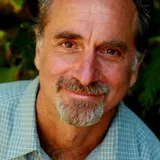
At the heart of this course are simple yet deep practices for listening empathically through tough conversations, finding common ground, and speaking your truth with power and compassion. This work gently attunes us to the signals of our bodies and a present, direct, immediate experience of the life we are living. NVC as a whole-body/mind, lifelong art and discipline develops skills that are valuable for anyone who wants to deepen the quality of their relationships, cultivate respect for the sacred, create supportive communities, and make changes — personal, social, political or environmental.
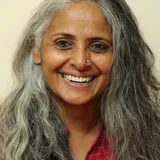
Our current times have brought up challenges all at once. Nonviolent Communication and traditional wisdom — in this case, the mystic poetry of Kabir, a Sufi saint from 15th century central India — help us weave a tapestry of new action as an emergent reality. During the session we will explore couplets of Kabir's wisdom with Warli folk art, reflect in terms of Observations, Feelings, Needs and Requests, and explore the "shoulds" and the needs motivating them. The activities will lead us to connect with the living energy of needs.
To step into the role of the mediator challenges all the NVC skills you have picked up. Serving others, being a third party in a conflict, will push you to really grow in your own communication. The mediator's job is similar to being the traffic police: asking someone to stop and someone else to talk, pointing at when it is time to go for connection and when it is time to go for agreements. You will need an empathic heart, but also the ability to access authentic and sometimes challenging honesty, courage to stop people, and clarity on key differentiations and how to track what is going on.
We explore these strong emotions and what lies beneath them: What is the deep intention of each of these strong emotions? What is the multi-generational confusion about them? What is the astonishing liberation when we live the shining needs behind them? Through the awakening questions of The Compass and the Triangle of Conscious Relationships, we discover the one movement — in our minds and with our bodies — that can change it all.
Can you imagine conflict being a way to better understand each other?! That is how we hold conflict in the realm of Restorative Circles. Let's create a space together in which everybody can speak and everybody can be heard. We will touch the basic principles of RC and invite you to explore a world in which conflict matters — and is appreciated. Cherished, even.
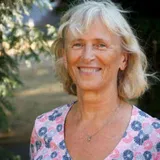
Listening with empathy to someone's pain is one thing when we have a close and relaxed connection with the person. It is a different thing when we are called to hear messages from people we disagree with. I have found that the biggest source for growing my capacity for listening with empathy has been my body — sensing the energy in my body, being aware of my breathing, expanding and grounding myself so that I can fully visit the other person's reality. In this class I will offer exercises that prepare us to show up open-hearted with giraffe ears. We will practice in pairs and share experiences with the whole group.
How do you respond when someone tells you that something you did was incredibly painful for them — especially if you took that action for a beautiful reason, out of care? What if you were accused of being sexist, classist, racist or more? Let's explore a simple model to help you know where to put your attention in those moments, and how to respond in a way that lays the foundation for healing. By understanding the relationship between intention and impact, and between the different levels at which harm occurs, we can respond powerfully, in a way that creates bridges and restores connection.
Can NVC be of help also in the world of organizations, perhaps even the most hardcore business-oriented corporations? If so, how to bring it in? Based on decades of Robert's experience working with organizations, we will explore certain elements that seem to be crucial in the process of transformation and paradigm shift.
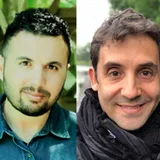
The NVC community is increasingly, often painfully, divided around the way the lens of privilege and power relates to Nonviolent Communication. This session is offered by NVC practitioners and trainers who recognize this lens as not just compatible, but essential to realizing the full promise of Nonviolent Communication. We invite those who have questions, confusion, doubts, or critiques about power and privilege — regardless of their level of NVC experience — into a conversation that is both about and grounded in NVC consciousness.
In the practice of Nonviolent Communication, fear is considered a feeling, and like all feelings is connected to our experience of being alive — welcome, useful, and important to help us recognize our needs. And yet many of us struggle powerfully with our fears, and judge ourselves terribly for even having them. These are frightening times. This session will invite participants to apply the practice of NVC to notice the thoughts at the root of our fears and to cultivate compassion for the needs being expressed.
What if you could tap into the flow and effectiveness of synergy — coming together as a team with a shared purpose that leverages diversity? Learn an approach to stepping towards togetherness when working with diverse teams. We will start with getting clear about the purpose of our collective work, identify perspectives that are missing, and then learn how to extend invitations to collaborate with care that meets the needs of people from diverse backgrounds. Integral to this work is understanding how principles of nonviolence support holding care for diverse groups.
In times of great planetary change and challenge, more than ever we need skills to connect to each other and unify our wisdom in service of life. Connection is a potent key to recover our power in the present. In this introductory session of NVC, we will explore different ways to connect, helping us to strengthen our relationships and our capacity to prioritize that which unites us.
Leadership is for everyone. We each carry an ember of the future which is coming. Are you ready to boldly offer your gift by stepping more fully into the next level of your leadership? Do you "trust yourself" with the power that's in leadership? Do you feel uncomfortable about being "more" than anyone else, or afraid people won't listen to you? To shine your light in the world brightly, and allow others to be enriched by your gifts, it's important to become aware of and move through whatever fears we may have. So now more than ever, it is important that you — no matter who you are, no matter what field you are in, no matter how young or old — step into your leadership.
Many of us in the NVC world feel frustrated because we want NVC to contribute more directly to transformation of individual and collective suffering, on a vast systemic scale. Personal and collective trauma is what drives war, hatred and violence. Trauma is a disorder of not being able to be in the here and now. We can't learn NVC or other new ways of relating to pain if we don't have the capacity to be present with our observations, thoughts, feelings and needs. In this session, through group sharing and practices, we will explore how we can address collective trauma in our daily NVC practice, as we build NVC community and influence societal transformation.
This session will explore how what is essential about NVC relates to the asking for, giving and receiving of money.

NVC is a way of reframing what is going on within each other and seeking to connect with our hearts in intimate relationships. If you have trouble bringing the consciousness of NVC to your most precious relationships, then you are so not alone! We'll look experientially at how those emotionally charged times are more than meets the eye, what invisibly influences and blocks love, NVC nuances that enable more emotional intimacy together, and how emotional and sexual intimacy are related — with open Q&A.
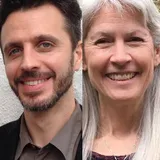
CNVC Certified Trainers Jared Finkelstein and Kathleen Macferran guide participants through an interactive workshop exploring some of the key differentiations of NVC. As a reflective practice, these differentiations help people cultivate more flexible thinking, empower authentic and caring relationships, and learn to use their power in ways that invite equity. As co-authors of "Choice," they ask: How do we better exercise our ability to make conscious choices? How do we learn to see what is invisible — to know what we don't know?
In a conversation and relationship, power dynamics and how we relate to power could affect the connection in both strong and subtle ways. We need to first develop a way of looking at our experience with the lens of power. Then, in order to reclaim our sense of strength and choicefulness in a power-under situation, we will work on cultivating empathy toward our experience and transforming some of our fear around power. The goal is to hold ourselves with care, connect to the humanity of the other person, and eventually be empowered to live a power-with relationship.
From Gandhi I learned that if you come into a dialogue with any preconceptions — judgments about the other person, or being oriented toward specific results — then it is simply not a dialogue. Dialogue is a space that will bring something that was never here before. It asks openness, and walking together in the unknown, for a while. In this session we will look into principles such as: the body knows so much that the brain doesn't; navigating through waves of dialogue; radical honesty / radical empathy; and the dialogue request — the very glue in dialogue.
One of the most painful tools that we humans learned to use against ourselves and each other is judgments. In this workshop we will explore the origin of this phenomenon, and discover the art of re-connecting with the hidden truth underneath the internalized separation: Why do we judge, and why won't it stop soon? How can we move from the horizontal blaming axis to the vertical connecting one — and re-emerge differently? Through the awakening questions of The Compass and the Triangle of Conscious Relationships, we find the one movement that can change it all.
This session is based on three assumptions about how, as leaders, we can use our power to serve, not to dominate: the leadership is a servant to the group; the leadership is there to help the group reach their goals in a way that is human and life-serving; and the leadership style will need to adjust and change depending on the group's maturation — moving between being directive, mediating, coaching, and letting go.
Prayer is a special kind of communication — so does NVC educate us to pray well? Is simply practising NVC already a prayer? What is most potent — prayer based on feelings, on needs, or on requests? How can we hold the suffering of others in our prayers even when our own needs are well met? Bridget will share ideas; there will be small-group conversations, inner exploration, and both guided and silent prayer time. This workshop is open to all: people who pray and those who don't, and people of any religion or none.
Street Giraffe Empathy: how to connect with all human beings (not only with NVC people). How to make the language of empathy fluid rather than mechanical. How to put the body experience — and the actual experience of falling in love — at the center of our intention while connecting empathically. What is the difference between understanding the needs of the other and seeing the needs of the other as beautiful?
Tadesse and Kathleen share about the teaching of NVC in schools in Uganda. Tadesse Hussien, from Kampala, is an educator who has worked for the past 20 years in pre-primary, primary and high school. A certified NVC trainer, he focuses on sharing NVC in schools — with kids, teachers and parents — and is part of the "One School at a Time" organisation. He will share his own journey with NVC, his work integrating it in schools, and his dreams for schools in Uganda.
This is a space for someone embarking on the journey of NVC, or even those who care to go back to the basic process of Nonviolent Communication. It's an invitation to revisit the process of NVC — Observations, Feelings, Needs and Requests — in a way you can pass on to your community with ease.
NVC offers us the possibility of deep transformation in our inner worlds and our relationships with others, and it also holds profound potential for transforming social systems on many levels. Our social systems can be understood as our ongoing ways of handling things like making decisions, engaging with conflict, or organising support, collectively. This session will explore some ways that NVC can help us to co-create the social systems we want, and the ways these living systems can create conditions that support the ways of relating and collaborating that are at the heart of NVC.
We host dinners on controversial topics with people who hold opposing views, facilitated to have empathic dialogues — where we focus on relating rather than debating.
CNVC Certified Trainers Jared Finkelstein and Kathleen Macferran guide participants through an interactive workshop to explore the meta view of essence (Soul) and form (Bones) of Nonviolent Communication. This framing came from a workshop with Marshall Rosenberg in Switzerland in 2005 and provides a wide-angle lens of the critical elements at the foundation of the practice of Nonviolent Communication.
We might think we are super-clear and still misunderstanding often happens. If we want to become the driver of our own car, we can take a look at how we can express ourselves differently. Maybe we have practised putting words to our inner world — to our feelings and needs — and now the next challenge is to connect with someone else: what do we want from them, and what do we want their reasons to be? Understanding the impact of guilt and shame when it comes to requests is an additional support in becoming clear both about how to answer other people's requests and how to express our own.

In this workshop I will share some ways I have applied an NVC consciousness in responding to gender-based violence situations in university contexts in Mexico City. I will share my four-year experience and lessons learned from holding spaces where structured conversations put feelings and needs at the center — where people (mainly women) impacted by gender-based violent behaviours were able to express the effects on their lives, where those who enacted these behaviours had the opportunity to acknowledge the impact and be accountable, and where together they could agree on strategies that meet the needs generated by the situation.
In this session Shigeko and Ken, who have been practicing NVC throughout their relationship for 16 years, share their experience: how it started, how they intended to use NVC, and how more often than not NVC didn't work. Instead of painting a rosy picture of how NVC can make a perfect intimate relationship, they share both good times and bad — how they managed to survive periods of intense disconnect, and how those periods contributed to even deeper connection.

How to reduce "othering" and increase inclusion and acceptance of people from diverse backgrounds. This is relevant to people who run NVC groups, workshops, and trainings and notice that — through the pandemic, with more sessions online — there is more diversity of folks in their sessions, and who would like extra awareness and skills to support everyone feeling welcome, no matter their race, gender, ethnicity, socioeconomic background, or ability level.
We all have been hurt, wounded, abandoned, disappointed, or traumatized in one way or another — and consequently our skin is covered with scars and even open wounds. But are those wounds only a hindrance in our lives, a disability that prevents us from being truly fulfilled? Or might they be hiding some superpowers that could serve life, if activated? In this session we explore our wounds and try to see if they have been containing some life-serving powers and sensitivities.
Do you judge yourself as "chaotic," "lazy," "silly" — or "judgmental"? Have these labels influenced you for a long time as you try to avoid or hide them? Let's turn them into life-serving energy instead.
"If I use Nonviolent Communication to liberate people to be less depressed... but not teach them, at the same time, to use their energy to rapidly transform systems in the world, then I am part of the problem... so I am using NVC as a narcotic." (Marshall Rosenberg, 2005). How can we become more aware of the domination systems we are immersed in and which permeate us? How can we identify them when we suffer their effects and when we perpetuate them, often against our better judgement? Join us as we investigate ways to become more aware and choiceful in how we contribute to the world and transform domination systems.
In order to share power through the practice of Nonviolent Communication, we need to be able to see and understand how power operates — not only in individual interactions but in society, in terms of relations of power between groups. Through self-reflection, pair and small-group discussions, we will explore systems of power that categorize people as better-than and less-than based on group membership in order to justify domination; the legacy of colonialism and its impacts on us currently; and possibilities for how we engage with each other when we have more awareness.
The "Basic PH model" and NVC in the service of our resilience, in times of pandemic. "My barn having burned down, I can now see the moon" (Mizuta Masahide). Our lives were disrupted by the pandemic; needs we know how to meet have been unexpectedly beyond our reach, and other needs have emerged. How do we find our capacity to move forward and even thrive? In this session we explore the specific challenges we face, the principal human strategies of resilience in times of crisis (the "Basic PH model"), how to recognize and connect with our own automatic resilience strategy, and how to discover strategies that support us in moving forward.
Marshall Rosenberg envisioned NVC as a powerful movement for social change. And yet many activists and professionals working for social change have serious reservations, mistrust, and at times even disgust about NVC. How have we as NVC practitioners and trainers missed the boat? In this session we unpack the colonial narratives of superiority and inferiority that influence our relationships; how we conceptualize the Self and its impact on NVC philosophy and practice; self-responsibility and connection to the collective; responsibility and accountability; and culturally-specific concepts being put forward as universal.
Work with your trauma using NVC principles. Gain practices for self-connection and easier connection with others.
The claiming of disgust is a powerful movement toward healing and has many implications for understanding our world both systemically and personally. Yet this feeling is often glossed over, ignored, or dismissed. What happens if we celebrate our capacity to notice when we are experiencing something in our environment as invasive, intrusive, or as a violation?
At the heart of this training are simple yet deep practices that attune us to the signals of our bodies and the present, direct, immediate experience of the life we are living. This requires us to quiet our minds and connect to our hearts, instincts, and creativity to empower our actions and find our voices. David shares foundational practices that nurture community, with the understanding that this is the most powerful reclamation work we can do for ourselves and for the world. To live more fully in community, we must live more fully in our bodies — where we come face to face with the history we've embodied, our deeper self, our greatest gifts, and the motivation to grow compassionate consciousness in the world.
Providing care for a loved one — an elder, a terminally ill, a physically challenged or a mentally disturbed person — is a demanding and daunting experience. How does one stay anchored in the face of imminent loss, and of one's own fragility and mortality? I invite you to join me in this exploration.
Why do we trigger each other in relationships? This session offers the opportunity to explore various parts of you, especially the ones that show up in your intimate relationships. You will explore your inner landscape by drawing an inner-parts map and empathizing from the Self perspective by applying the Internal Family Systems (IFS) framework. (Please bring colored pencils and drawing paper.)
Critiques of NVC are powerful inroads to exploring NVC's shadow, and shadows often illuminate systemic issues. Realising there is feedback about systems in everything, and listening for the life and vitality in criticism, is a helpful skill to strengthen your collaborations and build trust. Join me to explore two recent critiques of NVC, celebrate the life in them, and see how they can invigorate and sharpen your NVC awareness and practice.
Since very early on, I learned to avoid conflicts — to do anything I could to keep the harmony. Watching people around me fighting, it didn't seem attractive to me. I learned that conflicts are dangerous: they separate people and lead to explosion, anger, even violence. The painful side effect of learning to avoid conflict was that I learned to hide my own authenticity, which made my relationships dull and distanced. Slowly, I am learning to bring my honesty back into my relationships, and my focus has shifted from doing everything I can to avoid conflicts, to having the skills to enjoy conflict — to connect in conflict. Conflict is by far the most fertile ground I know for deepening connection.
Translating connection to touch the joy at the depth of life and hear the breath that binds all beings.
From a very young age, most of us learn to hide our truth (especially when it's not popular), to be polite (when inside we are burning) or to lie, and to express our needs and beliefs as harsh judgements, punishments or demands — justifying them as based on the right social values. In this workshop we will look at those two kinds of communication, realize the prices we pay for them, and learn how to overcome their grip, with tons of courage, curiosity and compassion: Why don't we speak our truth? How did we internalize judgements as a way of being? What is the deep transformation we can do with our judgements to move us towards a radical new presence?
To matter is an essential human need. Yet we often forget how we matter, or we simply don't have access to realising that we do. Do our needs really matter? Does our contribution, our presence, really make a difference? What if we had a tool to be instantly aware of our importance? This is the topic we will explore, in small groups, with body-based exercises. Join us. It matters.
In this session we explore how Nonviolent Communication can support us in handling difficult messages and strong emotions that come from children. I'll share how the fundamental needs for attachment and authenticity (as described by Gabor Maté) have deepened my appreciation for how NVC can support parents in raising children while holding both of these needs with care. You'll be invited to use real-life examples to delve into your own authenticity and to practice connecting with the authenticity of a child. Ultimately, we aim to communicate in a way that supports both authenticity and attachment.
In this session I share a construct that represents three primary dimensions of human consciousness and experiencing, to provide an internal orientation to experience that helps our understanding. A primary aim is to help us understand the qualities of the essential human being, and how through trauma and conditioning the defensive and protective structures emerge that keep us disconnected from our true selves and from others. The "Three Phases of Inner Compassion" is a process and a way to restore our wholeness from our wounded innocence.
An NVC-lens conversation about our experience as a Palestinian and a Jewish-Israeli CNVC certified trainer — living, experiencing, transforming, and discussing this issue from a compassionate yet critical perspective of power relations, identity, narrative, privilege, and more.
We all have aspects of ourselves that we are challenged by, that we struggle with — an illness, our weight or appearance, our awkwardness in public, or something else. These parts run in the background of our lives, continually sapping our happiness and undermining our confidence. But the astonishing thing is that these parts of ourselves that we judge and turn away from actually hold a vast intelligence — the same intelligence that makes our heart beat and our eyes shine. When we turn toward these parts and communicate with them, we uncover an intelligence and wisdom we didn't know existed.
At a time of heightened awareness of and resistance to both police violence against Black bodies and the inequitable impacts of the pandemic, the NVC community is increasingly, often painfully, divided around the way the lens of privilege and power relates to Nonviolent Communication. As one voice in a larger conversation, this session is offered by a white NVC practitioner and trainer who holds this lens as not just compatible, but essential to realizing the full promise of NVC. The session presents a set of framing ideas and then invites participants to contribute their own ideas, questions, confusions, doubts, critiques, and role plays related to power, privilege, and NVC.
In this workshop we practice the foundational tools of making clear observations, identifying shared purpose and needs, and matching listening strategy with goals — and we experience the impact of these tools on collaboration. We also explore our fears, concerns and inner obstacles so we can embrace collaboration more wholeheartedly.
People who trigger us can be the greatest gift offered to us by life — and they can also torment us. When someone says or does something that touches pain in us, we have the option to blame them, blame ourselves, or use the experience as an opportunity to heal. People and situations that previously tormented us become an opportunity to transform old reactive patterns and re-parent our lost inner children.
White fragility is a term developed by Robin DiAngelo related to racism in the USA. It refers to reacting with guilt, shame, anger, fear, defensiveness, or silence when white people witness discussions about racial inequality and injustice. I want us to extend the term to additional situations of inequality and injustice, like gender, education, and class. Together we will explore how we can use self-empathy to deal with the pain, listen with empathy to people who experience structural power-over dynamics, and take responsibility for changing these oppressive structures.
In this session we collectively connect with our grief, fear, anger, or emptiness for the pain we see in ourselves and in the world. We grieve our losses together and find renewed hope and strength in our common humanity, and renewed commitment to preserve this home we share.
Would you like to use your NVC practice to proactively engage in peace-building in bite-size steps that make a lasting difference? To grow in awareness of how the system we wish to transform also lives inside us? And to use that awareness for healing and transformation? We welcome you to this exciting exploration!
So many conversations get stuck on the level of opinions. So often a dinner discussion with family, friends, or your partner turns into a conflict between opinions. Opinions tend to live in "jackal land" (which opinion is better? what is the right thing?). Personally, I am not willing to stay in a dialogue on the level of opinions — it leads to a taste of separation and polarization. This session is dedicated to "going under opinion": to how we can navigate such challenging dialogues so that we meet as two human beings, being touched by one another, and how to live on one planet with people who differ from us. (Recommended pre-session for the other polarization sessions.)
In this workshop we dive into our inner universe and explore its topography. We will practice how to observe events and their impact on us, and how to differentiate between our feelings and our thoughts.
Guilt and worry seem to be two of the most prominent driving forces in parenthood. (And you can guess which others frequently join them.) In this workshop you will find ways to parent from a different place — beyond guilt and worry.
Does NVC contribute to a certain confirmation bias, without us even noticing? Is this in how NVC is taught, or is it NVC in itself that might lure us into not staying open to all perspectives? Is it better to express feelings than thoughts? Is it better to be open than to hold back? Is it better to listen with empathy than to express myself?
Mary says: "Developing a consistent self-empathy practice is the single most healing thing I've ever done for myself." Join Mary and learn three simple self-empathy techniques that bring profound, lasting results.
In every society, there are gaps in understanding across roles with different access to power and resources (parent-child; employee-boss; dominant racial group vs. historically marginalized groups). This session explores how we can close those privilege gaps with care and awareness.
Sex is something that's difficult to ignore in our lives because it's everywhere — reflected in social media, advertising, fashion, music, TV series, movies, and pornography. Yet it's still hard to talk about openly. In this session we bring NVC to the conversation around sex and intimacy.
"The number one reason we don't get our needs met: we don't express them. We express judgments instead. And if we do express needs, the number two reason we don't get them met: we make demands rather than requests." This introductory session explores how to make clear, life-serving requests.
Challenging dialogues around the topic of relationships — monogamous/open relationships (or any of the million possible names for it, and topics around it). In this session we explore how to stay connected through highly charged, polarized conversations, meeting as human beings rather than as opposing positions.
In this session you will get an introduction to NVC — to how the three revolutions in NVC can support you in radical transformation of yourself and the world you live in. We will explore creating peace, one judgement at a time.
At the heart of what I want to share in this session is a somatic experience that connects participants through their felt sense to the consciousness underlying NVC, and what empowers us to live it.
How does Nonviolent Communication fit with the teachings and practices of your religious and spiritual paths, especially in polarized situations? Compassion and kindness are medicines we can draw on to work through division — and this session explores how.
In this session we explore what it means for nonviolence to be a dynamic way of being beyond the frame of communication. Communication is critical — and it is also only one part of a much larger practice of nonviolence.
Marshall Rosenberg said, "If I use empathy to liberate people to be less depressed, to get along better with their family, and at the same time not inspire them to use their energy to rapidly transform systems in the world, then I am part of the problem." This session is about using NVC to support nonviolent activism and social change, not only personal growth.
Do human connection, wisdom, intuition, felt sense, and knowing hold the same importance in our world as intellect and analysis? In this session we examine the stories we've inherited and explore reclaiming balance by honouring the feminine story.
Many of us grow up with messages that lead to confusion between striving for competence, discovery and movement, and a fear of failure and imperfection. We create internal and external obstacles to acting for change. This session is about starting imperfectly — engaging in social change without waiting to be "ready."
As we grow up, we are often asked to love each other, and in the professional world to work well with one another. But how can we collaborate with someone else if we are not first collaborating with the different parts of ourselves? This session approaches collaboration from the inside out.
One support in handling polarization is to learn to move from "either/or thinking" towards more of "both/and thinking." In this session we explore how to embrace everyone in the conversation — holding two as a pair rather than as two opposites — using the example of Covid-19 vaccines.
When people use words we identify as "-ism" words — racism, sexism, ableism — I might jerk, feel uncomfortable, even terrified, and many other feelings may come up. This session explores how to work with those moments: when to apply empathy, and when to choose self-expression, in service of protecting life.
In this two-hour session we explore how the NVC tool of self-empathy can support our efforts to decolonise ourselves, allowing us to step towards our liberation from the impacts of internalised oppression and domination.
This session gives space for four community local leaders in Palestine-Israel. Following the current violent events in the region, we hear about their goals, challenges, and the change-making work they are doing on the ground.
Part of our healing is recreating our story, telling it in a cohesive way. We want our stories to reflect our reality and deepen our appreciation of ourselves. In this workshop we use journaling as a practice for working with NVC principles.
So often when we are witness to acts of oppressive and/or racist behaviour, we are left stumped and stifled about how to respond. We don't want to say the wrong thing. This session explores what we can say and do to intervene with care — being a witness to harm without freezing or causing more harm.
When our effort to connect doesn't work, Ken (my partner) and I tend to blame ourselves: "You practice NVC — you should be able to hear yourself and the other and connect!" In this session we share how we embrace the depth and complexity of our relationship, especially in the moments when we lose hope to connect.
We will explore power and privilege and how they show up in our lives and in our societies; what internalized oppression is, how it operates, and how it limits and blocks our ability to build solidarity — and how we can recover our dignity, strength and voice. [Open to BIPOC and those from the Global South.]
In this space we will practice empathic listening to our own needs as well as to others' needs without judgment. In addition, we will look for options for handling and holding difference, in service of building coexistence.
A continuation of the "Decolonizing our minds, decolonizing NVC" series. The ways well-meaning trainers and mediators might marginalize clients and participants, and contribute to structural inequities despite our intentions to the contrary. We will look at how to be in solidarity without falling into the trap of saviorism. (For those with NVC experience.)
Most of our developmental trauma is intertwined with what we name patriarchal trauma. The well-distinguishable traumatic experiences are only the tip of the iceberg of limiting patterns rooted in obedience. In this session we explore transcending trauma and choosing a life beyond obedience.
Sessions are listed by teacher. Tap a session to read its full description. Attendee-matching and per-festival access links are to be implemented.